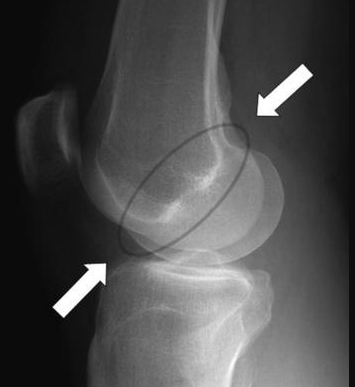
The angle at which this line appears on the radiograph can be used to determine the position of the patella or diagnose an acl injury.
Blumensaat Line. Blumensaat's line is a line which corresponds to the roof of the intercondylar fossa of femur as seen on a lateral radiograph of the knee joint. Blumensaat's line is a line which corresponds to the roof of the intercondylar fossa of femur as seen on a lateral radiograph of the knee joint. However, too much variation is introduced by knee flexion, angle of the blumensaat line with the femur, vertical length of the patella, and depth of the intercondylar notch for this method to be useful. Blumensaat line — a linear shadow on the lateral radiograph of the knee, representing tangential bone in the intercondylar space. It can be used for: The blumensaat line (bl), a radiographic landmark representing the roof of the intercondylar fossa, will accurately approximate the native acl (nacl) length and may aid in the prevention of gtm. On a normal radiograph, the line intersects the inferior pole of the patella , and so can be useful in diagnosing a broken femur as well as a patellar tendon rupture. Intercondylar line, blumensaat's line definition of blumnesaat line it is the tangent drawn along the roof of intercondylar notch or fossa of the… morphologic variations of blumensaat line (iriuchishima's classification). Blumensaat line, also known as the intercondylar line, is the line drawn along the roof of the intercondylar notch of the femur on a sagittal view of the knee. Blumensaat line is important because the angle that it forms on the radiograph with various other lines can be used to determine the position of the patella. The angle at which this line appears on the radiograph can be used to determine the position of the patella or diagnose an acl injury. On a normal radiograph, the line intersects the inferior pole of the patella, and so can be useful in diagnosing a broken femur as well as a patellar tendon rupture. Blumensaat line is a line which corresponds to the roof of the intercondylar fossa of the femur as seen on a lateral radiograph of the knee joint. The blumensaat line has been suggested as an indication of the relative position of the patella; Blumensaat's line is a line which corresponds to the roof of the intercondylar fossa of femur as seen on a lateral radiograph of the knee joint.
Blumensaat Line - Lateral Radiograph Of Cadaveric Knee With Marker Ball Used For... | Download Scientific Diagram
Recurrent Dislocation of patella -PAWAN. It can be used for: Blumensaat line is important because the angle that it forms on the radiograph with various other lines can be used to determine the position of the patella. Blumensaat line, also known as the intercondylar line, is the line drawn along the roof of the intercondylar notch of the femur on a sagittal view of the knee. Intercondylar line, blumensaat's line definition of blumnesaat line it is the tangent drawn along the roof of intercondylar notch or fossa of the… morphologic variations of blumensaat line (iriuchishima's classification). Blumensaat line — a linear shadow on the lateral radiograph of the knee, representing tangential bone in the intercondylar space. On a normal radiograph, the line intersects the inferior pole of the patella , and so can be useful in diagnosing a broken femur as well as a patellar tendon rupture. Blumensaat's line is a line which corresponds to the roof of the intercondylar fossa of femur as seen on a lateral radiograph of the knee joint. The blumensaat line (bl), a radiographic landmark representing the roof of the intercondylar fossa, will accurately approximate the native acl (nacl) length and may aid in the prevention of gtm. Blumensaat line is a line which corresponds to the roof of the intercondylar fossa of the femur as seen on a lateral radiograph of the knee joint. On a normal radiograph, the line intersects the inferior pole of the patella, and so can be useful in diagnosing a broken femur as well as a patellar tendon rupture. The angle at which this line appears on the radiograph can be used to determine the position of the patella or diagnose an acl injury. However, too much variation is introduced by knee flexion, angle of the blumensaat line with the femur, vertical length of the patella, and depth of the intercondylar notch for this method to be useful. The blumensaat line has been suggested as an indication of the relative position of the patella; Blumensaat's line is a line which corresponds to the roof of the intercondylar fossa of femur as seen on a lateral radiograph of the knee joint. Blumensaat's line is a line which corresponds to the roof of the intercondylar fossa of femur as seen on a lateral radiograph of the knee joint.
Blumensaat Line and Its Significance | Bone and Spine from boneandspine.com
The angle at which this line appears on the radiograph can be used to determine the position of the patella or diagnose an acl injury. For the clinical relevance, when acl surgery is. Blumensaat's line is a line which corresponds to the roof of the intercondylar fossa of femur as seen on a lateral radiograph of the knee joint.1 the angle at which this line appears on the radiograph can be used to determine the position of the patella or diagnose an acl injury.2. Sie können diesen text lesen? The positioning of the femoral tunnel on the lateral radiograph, expressed as a mean percentage relative to the anterior border of blumensaat's line, was 68.4% in group 1 and 58% in group 2 (p < 0.05). Dann ist die anzeige online und die fee weiterhin gerne zu. Patellar height was also evaluated after standardization of the angle between the femoral shaft and the blumensaat's line (corrected blumensaat method).
Blumensaat line, also known as the intercondylar line, is the line drawn along the roof of the intercondylar notch of the femur on a sagittal view of the knee.
It can be used for: The angle at which this line appears on the radiograph can be used to determine the position of the patella or diagnose an acl injury. Последние твиты от third man in (@blumensaat). Blumensaat's line is a line which corresponds to the roof of the intercondylar fossa of femur as seen on a lateral radiograph of the knee joint. Blumensaat's line is a line which corresponds to the roof of the intercondylar fossa of femur as seen on a lateral radiograph of the knee joint.1 the angle at which this line appears on the radiograph can be used to determine the position of the patella or diagnose an acl injury.2. Blumensaat line is important because the angle that it forms on the radiograph with various other lines can be used to determine the position of the patella. Blumensaat kaufen sie günstig online bei blumenzwiebelnversand. Wir garantieren qualität, billige preise und schnelle lieferung. The blumensaat line has been suggested as an indication of the relative position of the patella; The positioning of the femoral tunnel on the lateral radiograph, expressed as a mean percentage relative to the anterior border of blumensaat's line, was 68.4% in group 1 and 58% in group 2 (p < 0.05). A straight line was observed in 19 knees (37 %) (straight type). On a normal radiograph, the line intersects the inferior pole of the patella , and so can be useful in diagnosing a broken femur as well as a patellar tendon rupture. Hockey l eye test analyst wearing fancy stat glasses l colour man l ufa l header by @s7dsn. Dann ist die anzeige online und die fee weiterhin gerne zu. Bestellen sie die besten qualität blumensaat mit günstige versand und lieferung. Blumensaat line and patellar height blumensaat çizgisi ve patella yüksekli¤i aksel seyahi,1ata can atalar,2lutfuozgur koyuncu,1bekir murat the blumensaat's line was average 13% of the total length of blumensaat's line. Blumensaat's line is a line which corresponds to the roof of the intercondylar fossa of femur as seen on a lateral radiograph of the knee joint. The angle at which this line appears on the radiograph can be used to determine the position of the patella or diagnose an acl injury. Blumensaat line — a linear shadow on the lateral radiograph of the knee, representing tangential bone in the intercondylar space. The angle at which this line appears on the radiograph can be used to determine the position of the patella or diagnose an acl injury. However, too much variation is introduced by knee flexion, angle of the blumensaat line with the femur, vertical length of the patella, and depth of the intercondylar notch for this method to be useful. Blumensaat's line is a line which corresponds to the roof of the intercondylar fossa of femur as seen on a lateral radiograph of the knee joint. Blumensaat's line is a line which corresponds to the roof of the intercondylar fossa of femur as seen on a lateral radiograph of the knee joint. There were only 22% of the 55 knees that the sma passed at the tip of. Sie können diesen text lesen? The angle at which this line appears on the radiograph can be used to determine the position of the patella or diagnose an acl injury. On a normal radiograph, the line intersects the inferior pole of the patella, and so can be useful in diagnosing a broken femur as well as a patellar tendon rupture. For the clinical relevance, when acl surgery is. Blumensaat's line is a line which corresponds to the roof of the intercondylar fossa of femur as seen on a lateral radiograph of the knee joint. Blumensaat line is a line which corresponds to the roof of the intercondylar fossa of the femur as seen on a lateral radiograph of the knee joint. Blumensaat line, also known as the intercondylar line, is the line drawn along the roof of the intercondylar notch of the femur on a sagittal view of the knee.
Blumensaat Line : On A Normal Radiograph, The Line Intersects The Inferior Pole Of The Patella, And So Can Be Useful In Diagnosing A Broken Femur As Well As A Patellar Tendon Rupture.
Blumensaat Line , Femoral Shaft - Approach - Retrograde Nailing - Ao Surgery Reference
Blumensaat Line . The Femoral Insertion Of The Anterior Cruciate Ligament: Discrepancy Between Macroscopic And ...
Blumensaat Line , Blumensaat's Line Is A Line Which Corresponds To The Roof Of The Intercondylar Fossa Of Femur As Seen On A Lateral Radiograph Of The Knee Joint.
Blumensaat Line , The Positioning Of The Femoral Tunnel On The Lateral Radiograph, Expressed As A Mean Percentage Relative To The Anterior Border Of Blumensaat's Line, Was 68.4% In Group 1 And 58% In Group 2 (P < 0.05).
Blumensaat Line , Blumensaat Line Is Important Because The Angle That It Forms On The Radiograph With Various Other Lines Can Be Used To Determine The Position Of The Patella.
Blumensaat Line . Dann Ist Die Anzeige Online Und Die Fee Weiterhin Gerne Zu.
Blumensaat Line - Blumensaat Line And Patellar Height Blumensaat Çizgisi Ve Patella Yüksekli¤I Aksel Seyahi,1Ata Can Atalar,2Lutfuozgur Koyuncu,1Bekir Murat The Blumensaat's Line Was Average 13% Of The Total Length Of Blumensaat's Line.
Blumensaat Line . The Angle At Which This Line Appears On The Radiograph Can Be Used To Determine The Position Of The Patella Or Diagnose An Acl Injury.
Blumensaat Line - Blumensaats Line Is A Line Which Corresponds To The Roof Of The Intercondylar Fossa Of Femur As Seen On A Lateral Radiograph Of The Knee Joint The Angle At.